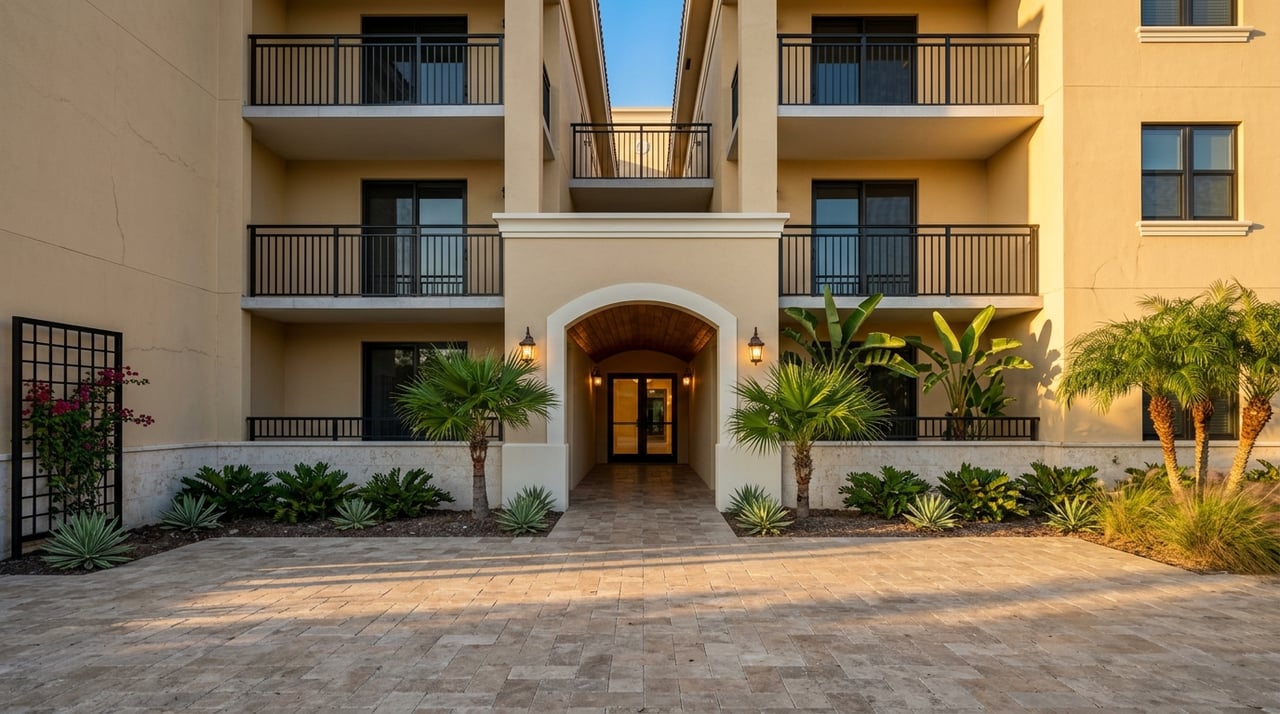
Trying to choose between a condo and a house in St. Petersburg? You are not alone. For many buyers, this decision comes down to more than square footage or style. It affects your monthly costs, your maintenance responsibilities, your financing options, and how much control you want over your property. If you are weighing both paths, this guide will help you compare them clearly and make a smarter choice for your goals. Let’s dive in.
Why this choice matters in St. Petersburg
In Pinellas County, buyers have real options on both sides. The county property appraiser lists 241,632 single-family units and 103,448 condo units, which means your decision is usually about lifestyle and ownership structure, not a lack of inventory.
St. Petersburg also has a wide mix of settings. The city zoning map shows higher-density downtown and corridor areas alongside lower-density residential areas, which helps explain why condo living and house living can feel very different depending on where you buy.
Condo vs. house: the core difference
At the simplest level, a condo gives you shared maintenance and shared decision-making through an association. A house usually gives you more direct control, but it also puts more of the upkeep directly on you.
Neither option is automatically better. The right fit depends on how you want to live, how hands-on you want to be, and how comfortable you are reviewing long-term costs and risks.
When a condo may make sense
Condos can offer easier day-to-day upkeep
Many buyers like condos because they can feel more manageable. Florida condo law makes the association responsible for common-element maintenance, which can reduce some of the day-to-day responsibilities you might have with a house.
That can be especially appealing if you want a lock-and-leave setup, a smaller footprint, or a property in a more urban part of St. Petersburg. Condo living is often associated with downtown and other higher-density areas where buyers may value convenience and walkability.
Condo documents matter more than many buyers expect
In Florida, condo buyers are entitled to review key association records. These can include the declaration, bylaws, rules, annual financial statement, annual budget, and, when applicable, the milestone inspection summary and the most recent structural integrity reserve study.
This is not just paperwork to skim. As of July 2026, many older associations should already have completed or reported structural integrity reserve study work, so buyers should treat these records as current financial and building-condition facts.
Reserve funding and special assessments deserve close attention
Current Florida law limits the ability of owner-controlled associations to waive or underfund required reserves for covered components. That matters because reserve funding affects how well a building can prepare for major repairs over time.
If reserves have been reduced or if the budget is strained, owners may face special assessments. Before you buy a condo in St. Petersburg, it is smart to look closely at what the monthly fee covers and whether there are any pending assessments.
When a house may make sense
Houses usually offer more control
If you want more say over your property, a house may be the better fit. In a single-family home, there is no condo association responsible for common elements, so you typically have more autonomy over the property’s use, appearance, and long-term decisions.
That extra freedom can be a major plus for buyers who want more privacy, more land, or a property that feels less structured by shared rules. In St. Petersburg, single-family homes are common in established areas such as Crescent Heights, Historic Old NE, Euclid-St. Paul, Shore Acres, Snell Isle, Historic Kenwood, Disston Heights, and Jungle Terrace.
More control also means more responsibility
A house may give you flexibility, but it also gives you the full weight of upkeep. Repairs, long-range maintenance, and property care are less centralized than in a condo.
For some buyers, that is a good trade. For others, especially if time or convenience is a concern, the maintenance side of house ownership can feel heavier than expected.
Compare total monthly cost, not just list price
A lower list price does not always mean a lower cost of ownership. In St. Petersburg, the smarter comparison is your total monthly cost and risk, especially when you are deciding between a condo and a house.
Property taxes can change after purchase
Pinellas County’s tax estimator is designed for new buyers, and it is worth using because taxes are not based only on the current listing price. If the property will be your primary residence, the homestead exemption and Save Our Homes rules can materially reduce taxable value over time.
Pinellas County notes that Save Our Homes caps annual assessed-value increases on a homesteaded property at 3% or CPI, whichever is less, beginning the year after the homestead exemption is granted. The homestead application deadline is March 1 following the year of purchase, and the property must be your permanent residence.
Insurance can be the biggest swing factor
In coastal Florida, insurance often has a major impact on affordability. Pinellas County says flooding can happen anywhere, and most homeowners policies do not cover flood damage.
That applies whether you buy a house or a condo. The county also notes that flood insurance has a 30-day waiting period and that even a third-floor condo is not automatically protected if severe flooding affects the ground floor.
NFIP pricing is property-specific and can depend on flood risk, elevation, foundation type, replacement cost, and construction details. Pinellas County also notes that loss assessment coverage can be added to homeowners or condo policies for shared-community assessments.
Financing is not always equal
Condo loans can depend on the project
Financing a condo is not always as simple as financing a house. FHA condo loans are available only for FHA-approved projects or certain single-unit approval situations.
HUD’s condo documentation process can involve project-level review of budgets, reserve studies, insurance, flood maps, litigation, and other building-related items. Fannie Mae also says projects with critical repairs, inadequate insurance, or significant litigation may be ineligible until issues are resolved.
That means you may love the unit, but the building itself can affect whether your loan works. If you plan to buy a condo, it is wise to confirm early that the project fits your intended loan program.
Houses may feel more straightforward
A single-family home does not carry the same project-review layer that a condo can. That does not mean financing is effortless, but it can remove one category of uncertainty from the process.
If you want to avoid association-level lending questions, that may push you toward a house. Still, you should always compare the full cost picture, especially insurance and future maintenance.
Flood and storm due diligence is essential
St. Petersburg is an urbanized coastal peninsula, and the city’s flood analysis describes exposure to hurricanes, storm surge, and increased runoff. Pinellas County also says flood and drainage problems can happen after heavy rain or prolonged rain, and that flood zones are not the same as evacuation zones.
The county emphasizes that everyone lives in a flood zone, with risk ranging from high to low. So the key question is not simply condo versus house. It is how the specific property handles water, drainage, elevation, and insurance.
What to check before you make an offer
Before you move forward on either type of property, review:
- The county flood map service center
- The evacuation zone
- An elevation certificate, if available
- A flood insurance quote
- For condos, any building-related flood documents tied to financing or insurance
This step can help you avoid surprises and compare properties more accurately.
A simple way to decide
If you want shared maintenance, lock-and-leave convenience, and an urban lifestyle, a condo may be the better match. You just need to be comfortable reviewing association finances, reserve funding, inspections, and financing eligibility.
If you want more autonomy, more privacy, and more control over upkeep and use, a house may be the stronger fit. You should also be ready for more direct responsibility when it comes to maintenance and long-term costs.
In St. Petersburg, the best decision usually comes from matching the property type to your lifestyle, budget, and risk tolerance, not from chasing the lower list price.
Questions to ask yourself first
Before you decide, ask yourself:
- Do you want convenience or control?
- Are you comfortable reviewing condo budgets, reserves, and inspection records?
- Would you rather pay a monthly condo fee or manage repairs more directly?
- How important are privacy, outdoor space, and flexibility?
- What flood and insurance costs come with each option?
- Will the property be your primary residence for homestead purposes?
- If buying a condo, is the building eligible for your loan program?
A clear answer to those questions can narrow your options quickly.
If you want help comparing St. Petersburg condos and houses side by side, with real-world guidance on costs, flood considerations, and neighborhood fit, KT Tershowski can help you move forward with confidence.
FAQs
Should you buy a condo or house in St. Petersburg based on lifestyle?
- Choose a condo if you want shared maintenance and a more lock-and-leave setup. Choose a house if you want more privacy, land, and direct control over the property.
What condo documents should you review before buying in St. Petersburg?
- Review the declaration, bylaws, rules, annual financial statement, annual budget, and, if applicable, the milestone inspection summary and most recent structural integrity reserve study.
How do flood risks affect condos and houses in St. Petersburg?
- Flood risk matters for both. Pinellas County says flooding can happen anywhere, flood zones are not the same as evacuation zones, and even upper-floor condo owners can still be affected by severe ground-floor flooding.
Can homestead exemption apply to both condos and houses in Pinellas County?
- Yes. If the property becomes your permanent residence, Pinellas County says the homestead rules can apply whether you buy a condo or a house.
Why can condo financing be harder than house financing in St. Petersburg?
- Condo financing can depend on the entire project, including budgets, reserves, insurance, flood documents, litigation, and repair status, not just your personal loan qualifications.