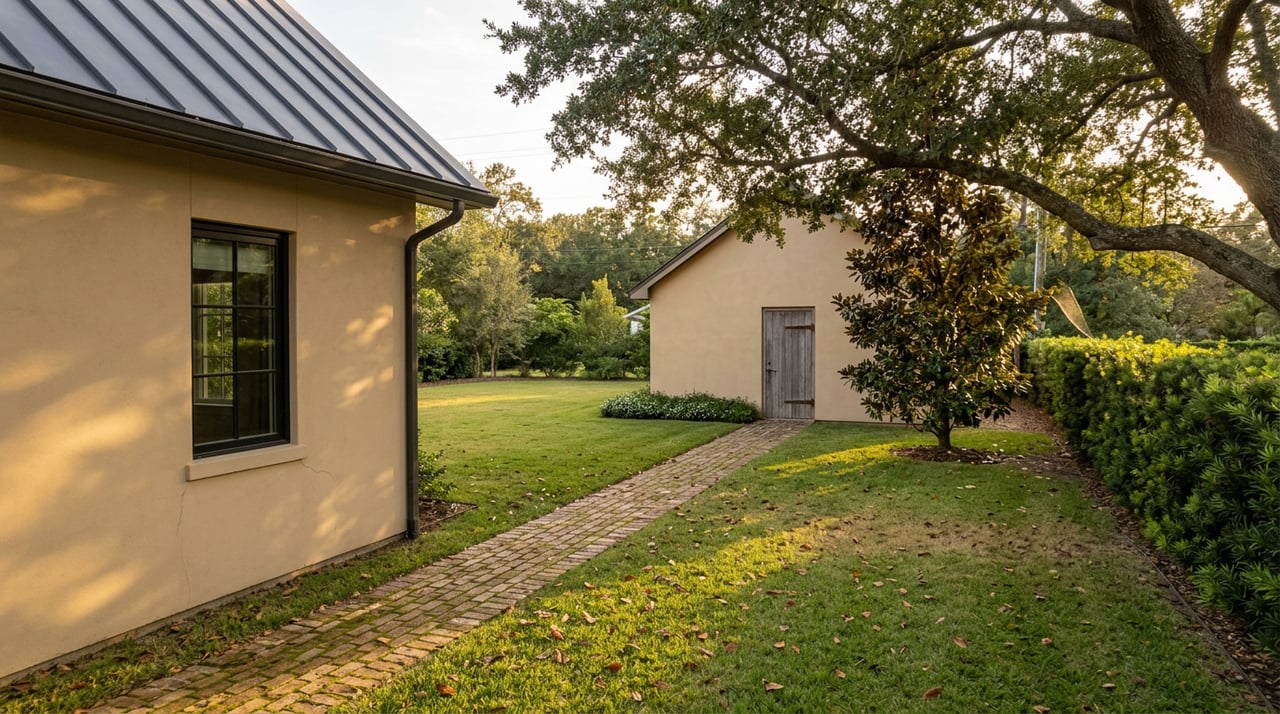
A Lutz seller does everything right. The lawn gets mowed, the pressure washer comes out for the driveway, the listing photos go up showing the mature oaks and the extra half acre that drew the family here in the first place. Offers come in within the first two weeks. Then, three weeks into the contract, the buyer's lender flags something nobody mentioned at the kitchen table during the listing appointment: proof that the septic system actually works. Now the seller is scrambling for a contractor, a pump-out, and an inspection report, all while the clock on a financing contingency keeps ticking.
That sequence is not an edge case in Lutz. It is close to the default, because so much of the housing stock here still runs on private well and septic rather than municipal water and sewer. Understanding why the check happens late, and why it happens the way it does, is the difference between controlling your timeline and reacting to someone else's.
Most of Lutz Was Built Before the Question Came Up
The primary Lutz zip codes, 33548, 33549, and 33558, cover a mix of older established parcels and newer subdivisions, but a meaningful share of that housing stock sits on lots large enough, and old enough, that municipal utilities never reached them. Homes on these larger, older lots frequently rely on private wells and septic systems instead of city water and sewer lines. That is part of what gives Lutz its half-acre-and-up character compared to the tighter lots closer to downtown Tampa. It is also what makes the septic question something almost every Lutz seller eventually answers, whether they planned to or not.
No One Is Required to Check the Tank Before You List
Here is the part that catches sellers off guard. Florida has no statewide law requiring a septic inspection before a home sale, and Hillsborough County has not adopted its own local requirement either. Nobody is going to show up and force the issue while you're preparing to list. The Florida Department of Health regulates septic systems under state administrative code, but that regulation covers permitting, installation, and repair, not a mandatory checkup at the point of sale.
That absence of a mandate is exactly what makes the timing so easy to get wrong. The check that actually decides whether your closing happens on schedule is not a government requirement. It is a lending requirement.
FHA and VA loans typically require evidence that the septic system functions before the lender will clear the file. Once financing enters the picture, the septic system gets checked whether the seller planned for it or not.
So the system gets checked either way. The only real choice a seller has is when, and by whom.
The Line That Runs Through the Middle of Town
Lutz sits directly on the boundary between Hillsborough County and Pasco County, and that geography adds a second layer most general Florida guides never mention because they are not written for a place that splits down the middle. Depending on which side of that line a specific address falls, a seller is dealing with a different permitting authority, a different school district, and a different property tax jurisdiction.
| Hillsborough County side | Pasco County side | |
|---|---|---|
| Septic and well permitting | Hillsborough County Department of Health, Environmental Health office | Florida Department of Health in Pasco County |
| School assignment | Hillsborough County Public Schools | Pasco County Schools |
| Property tax rate | Set by Hillsborough County millage | Set by Pasco County millage |
None of this shows up on a listing sheet. It shows up when someone tries to pull permit history on a septic system and calls the wrong county office first, or when a buyer's agent from outside the area assumes one set of rules applies to the whole community. Confirming which county's health department actually issued the original septic permit is a five-minute check that saves a week of confusion later in the transaction.
The County's Sewer Money Is Not Headed Your Way
Some sellers assume the problem will eventually solve itself, since Hillsborough County has been actively converting neighborhoods from septic to central sewer service. It has, but the current program is targeted at specific areas around Tampa Bay where septic density poses the greatest risk to water quality: parts of Ruskin, Wimauma, and the University Area between Fowler and Bearss avenues. Those are real, funded projects with construction phases already underway.
Lutz is not one of the areas currently in that pipeline. The county's program is built in phases, prioritizing the highest-vulnerability zones near the bay first, and there is no announced timeline for extending free or subsidized conversion to the acre lots of northern Hillsborough. For a Lutz homeowner, that means the private system on the property today is a long-term reality to manage, not a problem waiting on a county truck to fix.
What Getting Ahead of It Looks Like on a Timeline
The gap between a smooth closing and a stalled one usually comes down to sequencing. A seller who treats the septic system as a pre-listing task keeps control of both the price and the calendar. A seller who waits hands both to whoever the buyer's lender happens to send.
- Schedule a septic inspection and pump-out two to four weeks before listing. A standard inspection in the Tampa Bay area typically runs $250 to $375, and a full pre-listing inspection with pump-out runs $400 to $800 depending on access and tank condition.
- Pull the permit history from the correct county health department based on the property's actual address, not an assumption about which side of the line it falls on.
- Confirm whether the system is a standard gravity tank or an aerobic treatment unit. ATU systems require an operating permit, inspections every six months, and a full evaluation every two years, and whoever buys the home inherits those obligations along with a maintenance contract that typically runs $300 to $600 a year.
- If the tank's access lids are buried under more than 18 inches of soil, consider having risers installed. It is a modest cost now that makes every future inspection and pump-out faster and cheaper.
- Fix small issues immediately. A cracked baffle caught during a pre-listing inspection might cost $200 to repair. The same finding discovered by a buyer's inspector, in the middle of a financing contingency, tends to become a renegotiation point worth $2,000 or more.
The Karst Wrinkle Along the County Line
There is one more local wrinkle specific to this corridor. Eastern Hillsborough County near the Pasco border sits on karst limestone, the same geology responsible for Pasco County's reputation as part of Florida's "Sinkhole Alley." Solid ground in one spot can give way to a dissolved void ten feet away. That does not mean every Lutz property has a sinkhole problem. It means that any septic site evaluation near the county line benefits from a contractor who understands local soil conditions, not just standard drain field mechanics. It is a small detail, but it is the kind of detail that separates a seller who has done this before from a seller finding out for the first time.
Quick Answers Before You List
Do I have to tell a buyer if I already know the septic system has a problem? Yes. Florida's general disclosure requirements, built from statute and case law, require sellers to reveal known material defects. A septic issue you are aware of falls into that category even without a formal inspection mandate forcing the disclosure.
What changes if my home has an aerobic treatment unit instead of a standard tank? An ATU comes with an active operating permit and a maintenance contract, and both transfer to the buyer. It is worth confirming the contract is current and the six-month inspection schedule is up to date before you list, since a lapsed ATU permit can slow down closing just as easily as a failed drain field.
Is Hillsborough likely to extend septic-to-sewer funding to Lutz soon? There is no confirmed timeline. The current program phases are concentrated in Ruskin, Wimauma, and the University Area, chosen for their proximity to the bay and existing sewer infrastructure. Homeowners in Lutz should plan around maintaining a private system rather than anticipating a county-funded conversion.
Selling a home with a private well and septic system in Lutz is not harder than selling anywhere else in Tampa Bay. It just rewards a different kind of preparation, one built around timing and paperwork rather than curb appeal alone. If you're planning to list a Lutz property and want a clear read on what your specific system and county line mean for your timeline, KT Tershowski has spent years walking Lutz sellers through exactly this kind of local detail. Let's Connect before you list, not after your buyer's lender finds the surprise for you.